
A Guide to Washington Cannabis Law
Washington's cannabis market is governed by RCW 69.50 and implementing rules under WAC 314-55, overseen by the Washington State Liquor and Cannabis Board (WSLCB). The framework allows adults 21 and older to purchase up to 1 ounce of flower, 16 ounces of solid edibles, or 72 ounces of liquid cannabis products per transaction, with all cannabis products subject to a 37% excise tax plus state and local sales tax.
Washington was, alongside Colorado, the first U.S. state to legalize adult-use cannabis. The framework that emerged from Initiative 502 has matured into one of the more disciplined regulatory systems in the country, with serving caps, packaging review, and tax structures that other states have studied closely. This guide walks through how the law actually works in practice, both for consumers buying a single can of THC beverage and for businesses operating inside the licensed market.
The Statutory Framework: I-502, RCW 69.50, and WAC 314-55
Washington cannabis law comes from three sources: Initiative 502 (the 2012 voter initiative), Chapter 69.50 RCW (the statute, formally the Uniform Controlled Substances Act), and Chapter 314-55 WAC (the agency rules adopted by the Washington State Liquor and Cannabis Board). Knowing which is which makes the various Washington-specific cannabis rules easier to understand.
Initiative 502 was approved by Washington voters in November 2012 with 55.7% of the vote. It legalized possession of cannabis for adults 21 and older, created a system of state licenses for producers, processors, and retailers, imposed a 25% excise tax (later restructured into a single 37% tax at the retail level), and directed the state to write implementing rules.
RCW 69.50 is the chapter of state law where I-502's provisions live. The chapter is called the Uniform Controlled Substances Act, and the cannabis-specific sections are grouped together within it. They set the minimum purchase age of 21, the labeling requirements for cannabis products, and the prohibition on public consumption.
WAC 314-55 is the WSLCB's implementing rule chapter. The Revised Code of Washington tells the agency what to do; the Washington Administrative Code is where the agency spells out the operational details. The chapter covers everything from license application procedures to product testing standards to packaging artwork review.
The Three License Tiers (Producer, Processor, Retailer)
Washington's cannabis industry is built on three tiers of license: Producer (cultivation), Processor (manufacturing), and Retailer (sales to consumers). Mirth Provisions holds a Tier 1 Processor license, with a marijuana-infused edible endorsement from the Washington Liquor and Cannabis Board. The WSLCB issues each tier as a separate license, and a single company can hold both a producer and a processor license but cannot also hold a retailer license. This vertical separation is a deliberate design choice meant to prevent the kind of consolidation that the state's three-tier alcohol system also tries to prevent.
Producer license. A producer license authorizes the cultivation of cannabis. The state limits how much each producer can grow at one time by capping its canopy, the square footage of plants under cultivation. Producers sell flower and trim wholesale to licensed processors. The relevant rule is WAC 314-55-075.
Processor license. A processor license authorizes the manufacture of cannabis products from raw flower or trim. This is the license tier under which beverages, edibles, concentrates, vape cartridges, pre-rolls, and topicals are made. Processors purchase from licensed producers, manufacture finished products in WSLCB-inspected facilities, and sell wholesale to licensed retailers. Every product, package design, and label must be reviewed and approved by the WSLCB before it can be sold. The relevant rule is WAC 314-55-077. Mirth Provisions operates under a state cannabis processor license.
Retailer license. A retailer license authorizes the sale of cannabis products directly to adult consumers. Retailers are the only tier with consumer-facing storefronts, and they cannot also hold producer or processor licenses. The number of retail licenses is capped statewide, with allocations distributed by county.
The vertical separation has practical consequences. A consumer who walks into a dispensary is buying a product that has passed through at least two licensed businesses (producer and processor) and often three. Each transition is tracked in the WSLCB's seed-to-sale traceability system, which records every gram of cannabis from the moment it enters the licensed market.
Cannabis Beverage Manufacturing Rules
Cannabis beverages are classified as Marijuana Infused Edibles (MIEs) under Washington law, which subjects them to the strictest packaging, labeling, and serving-size rules in the regulatory framework. The MIE rules are designed to prevent accidental consumption, especially by children, and to ensure consistent and accurate dosing.
Serving size cap. A single serving of an MIE, including any beverage, may contain no more than 10mg of active THC. This cap applies whether the product is a 12-ounce can of sparkling tonic, a 4-ounce shot, or a 2-ounce sublingual spray.
Package limit. A single retail package of MIE may contain up to 100mg of total THC, divided into 10 servings of 10mg each that are easy to tell apart. A multi-serving beverage bottle, for example, must have a serving cap or measurement device that makes each 10mg serving identifiable.
Packaging and labeling review. Every MIE package design must be submitted to the WSLCB for pre-market review. Labels must include the universal cannabis warning symbol, the THC content per serving and per package, ingredients, allergens, the producer and processor license numbers, a batch identifier, and required warning statements. The applicable rule is WAC 314-55-105.
Child-resistant packaging. All MIE packaging must be certified child-resistant under ASTM and CPSC standards. For beverages, this typically means a child-resistant cap, foil seal, or carton seal that meets the federal poison prevention testing protocol.
No appeal to minors. Packaging and product design may not include cartoon characters, mimic mainstream non-cannabis brand designs, or use shapes or imagery that would appeal to children.
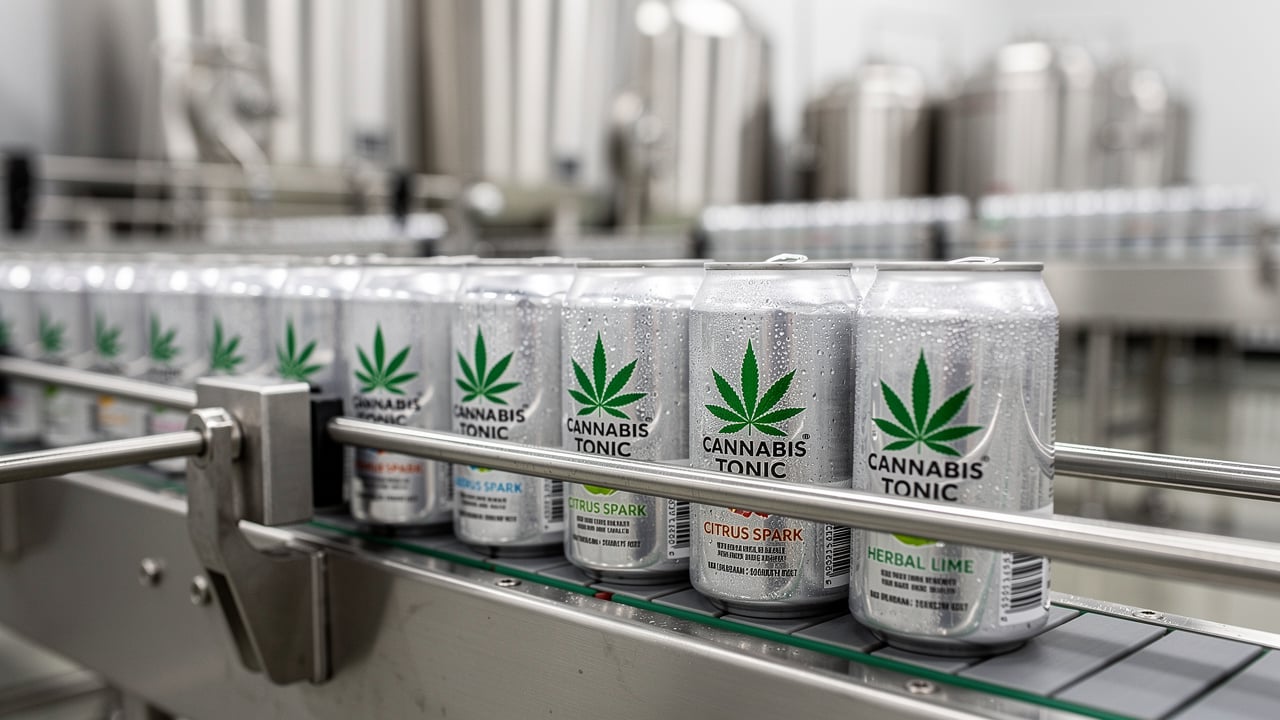
Testing. Every batch of finished MIE product must pass third-party laboratory testing for potency (verifying the THC content matches the label), pesticides, heavy metals, microbials, and residual solvents. Products that fail testing cannot enter the licensed market.
The aggregate effect of these rules is that a Washington cannabis beverage is one of the most heavily reviewed consumer products sold in the state. For more on how this regulatory environment shapes the consumer experience, see our guide to Washington THC drinks.
Consumer Purchase Rules
For consumers, the rules at the point of sale are straightforward but worth knowing in detail. The WSLCB enforces them through compliance checks, and retailers face license suspension or revocation for violations.
Age verification. Buyers must be 21 or older and must present a valid government-issued photo identification. The ID requirement applies to everyone, every visit, with no exceptions for apparent age. Acceptable forms include a U.S. or foreign driver's license, state-issued ID card, passport, or military ID. Verification at the door (not just at the register) is standard practice.
Transaction limits. An adult may purchase up to 1 ounce of usable cannabis (flower), 16 ounces of cannabis-infused product in solid form, 72 ounces of cannabis-infused product in liquid form, or 7 grams of cannabis concentrates in a single transaction. The liquid limit is what makes Washington a workable market for beverages: 72 ounces of liquid product, paired with the 10mg per serving cap, gives a consumer meaningful access to multi-serve bottles and variety packs.
Cash, debit, and the banking situation. Many Washington retailers still operate primarily in cash because most banks will not provide accounts to cannabis businesses (more on this in the federal section below). Some retailers accept debit cards through cashless ATM systems or private payment processors, but credit cards are essentially never accepted. Bring cash if you are unsure.
The 37% excise tax. Every retail cannabis purchase in Washington carries a 37% excise tax on top of the listed price. Standard state and local sales tax (typically another 8 to 10% depending on jurisdiction) is then layered on top of the post-excise price. A 25 dollar pre-tax product becomes roughly 37 to 38 dollars at the register. The tax structure is straightforward but the totals can surprise first-time buyers.
Hours and density. Retailers may operate between 8 a.m. and midnight, and may not be located within 1,000 feet of schools, playgrounds, child care centers, libraries, public parks, transit centers, or video arcades. The 1,000-foot buffer can be reduced to 100 feet for certain protected uses if the local jurisdiction has opted into the reduction.
Public Consumption, Driving, and DUI Law
Possession is legal in Washington, but consumption is restricted to private property where the property owner allows it. The state does not authorize public consumption, and driving after using cannabis is subject to a per se DUI threshold that has no equivalent for impairment.
Public consumption prohibition. RCW 69.50.445 prohibits opening a package of cannabis or consuming cannabis in view of the general public, in a public place, or in a vehicle. RCW 69.50.4014 governs simple possession outside the licensed framework. Violations of the public consumption rule are typically charged as civil infractions with fines, but enforcement varies significantly by jurisdiction.
What counts as a "public place" includes sidewalks, parks, beaches, restaurants, bars, hotel rooms (most hotels classify themselves as smoke-free public accommodations), rental cars, rideshare vehicles, and the common areas of multi-unit residential buildings. What counts as private is a single-family home with the owner's permission, or a rental unit where the lease does not prohibit cannabis use. Some short-term rentals advertise as cannabis-friendly; many do not.
DUI per se threshold. Washington is one of a handful of states that uses a per se threshold for cannabis DUI. Under RCW 46.61.502(1)(b), a driver is guilty of DUI if a blood test taken within two hours of driving shows 5 nanograms or more of active delta-9 THC per milliliter of whole blood. The threshold applies regardless of whether the driver actually appears impaired.
The 5 ng/mL threshold has real consequences for beverage consumers. Active THC from an ingested product (including a beverage) typically peaks in the blood within 1 to 3 hours of consumption and can remain above 5 ng/mL for a number of hours afterward, depending on dose, body weight, and metabolism. The state Patrol's drug recognition program and roadside oral fluid screening tools are increasingly used to establish probable cause for a blood draw.
The practical guidance: do not drive on the same day you consume any THC product, whether a beverage, edible, vape, or flower. For more on how beverage onset and duration affect consumption planning, see our guide to dosing THC drinks.
Visitors and Out-of-State Considerations
Washington does not require state residency to purchase cannabis. Any adult 21 or older with valid government-issued photo identification may buy from a WSLCB-licensed retailer, regardless of where they live. This makes Washington one of several legal-state destinations that attracts cannabis-tourism traffic from neighboring states with stricter laws.
The complication is that everything legal about a Washington purchase becomes illegal the moment you cross a state line. Transporting cannabis across any state border violates federal law under the Controlled Substances Act, even between two states with legal adult-use markets. Oregon, Idaho, British Columbia, and every other neighboring jurisdiction treats cannabis purchased outside its own licensed system as untaxed, unauthorized product.
Crossing the Oregon border. Oregon is a fully legal state, but Oregon law makes it illegal to transport cannabis into Oregon from outside its licensed system. The same is true in reverse. Cannabis purchased in Washington must stay in Washington.
Crossing the Idaho border. Idaho prohibits cannabis in all forms, and the Idaho State Police actively enforce against drivers traveling east on Interstate 90 from the Spokane area. Possession in Idaho is a misdemeanor for up to 3 ounces and a felony above that, with penalties that include jail time.
Crossing the Canadian border. The U.S.-Canada border is a federal jurisdiction, and Customs and Border Protection treats cannabis possession as a federal offense regardless of the legality at origin or destination. CBP officers may deny entry, seize products, and document the encounter in ways that affect future border crossings.
Air travel. Cannabis cannot be flown out of Washington on a commercial flight, even to another legal state. SeaTac and Spokane International Airports allow possession on airport property up to the federal security checkpoint, where federal law takes over. TSA officers do not actively search for cannabis but will refer any product discovered to local law enforcement.
Visitors planning to consume in Washington should also know that most hotels are smoke-free, and many short-term rental platforms restrict cannabis use in listings. Booking a cannabis-friendly stay in advance is the simplest way to avoid problems.
Federal Law (Schedule I and Schedule III)
Federal law now treats cannabis two ways. Adult-use cannabis, which is what licensed Washington retailers sell to the general public, remains a Schedule I controlled substance under the Controlled Substances Act. Cannabis sold under a state medical marijuana license has been Schedule III since April 2026. Washington's legalization, like every other state's, operates entirely within state borders, and the federal-state conflict still has real consequences for consumers.
Schedule I. Schedule I is the most restrictive category in the federal drug schedule, alongside heroin and LSD, and formally means no accepted medical use and a high potential for abuse. Cannabis was placed there by the original 1970 Controlled Substances Act, and adult-use cannabis is still there.
Schedule III for medical cannabis. On April 28, 2026, the Drug Enforcement Administration's final rule (AG Order 6754-2026) moved two categories of marijuana from Schedule I to Schedule III: FDA-approved drug products containing marijuana, and marijuana subject to a state medical marijuana license, in any form, including flower, extracts, and infused products. Schedule III is the category that holds ketamine, anabolic steroids, and codeine combinations, and it carries an explicit federal finding of accepted medical use. The rule also protects researchers who obtain marijuana from state-licensed operators from liability under the Controlled Substances Act, which for the first time lets clinical research use the same products patients actually buy.
Federal employment. Federal employees, federal contractors with drug-free workplace requirements, and applicants for federal security clearances remain subject to federal drug policy regardless of Washington law. A positive THC test can disqualify an applicant or terminate an employee even when the cannabis was purchased and consumed entirely legally under Washington law.
Interstate commerce. The Commerce Clause of the U.S. Constitution would normally allow goods to move freely between states, but because cannabis remains a federally controlled substance, interstate transportation is preempted by federal law. This is why every state cannabis market is an island: Washington-grown flower cannot legally be sold in Oregon, and Oregon-made beverages cannot legally enter Washington.
The federal-state conflict also drives the distinction between hemp-derived and cannabis-derived products. Hemp (defined as cannabis containing less than 0.3% delta-9 THC by dry weight) was removed from the Controlled Substances Act by the 2018 Farm Bill, which is why hemp-derived THC beverages can ship across state lines while cannabis-derived beverages cannot.
How Washington Compares to Other Legal States
Washington's framework is one of the highest among legal states on taxation and in line with its neighbors on serving size, but more permissive than some on visitor purchases and retailer availability. The table below compares Washington to three other major legal-state markets on the most consequential numbers for consumers.
| State | Excise Tax | State Retail Sales Tax | Possession Limit (Flower) | Beverage Serving Cap | Key Regulator |
|---|---|---|---|---|---|
| Washington | 37% | 6.5% + local | 1 ounce | 10mg per serving | WSLCB |
| Oregon | 17% | None (state); up to 3% local | 1 ounce (public); 8 ounces (home) | 10mg per serving | OLCC |
| California | 15% | 7.25% + local | 1 ounce (28.5 grams) | 10mg per serving | DCC |
| Colorado | 15% | 2.9% + local | 2 ounces | 10mg per serving | MED |
Note: Tax rates and possession limits are current as of May 2026. Local jurisdictions in each state may impose additional taxes or restrictions. WSLCB is the Washington State Liquor and Cannabis Board, OLCC is the Oregon Liquor and Cannabis Commission, DCC is the California Department of Cannabis Control, MED is the Colorado Marijuana Enforcement Division.
A few patterns worth noting. Washington's 37% excise tax is the highest of any major legal-state market, by a substantial margin. Oregon's lower tax and absence of a state sales tax make a typical purchase 25 to 30% cheaper at the register, which drives some cross-border purchasing pressure (though as noted above, cannabis cannot legally cross the state line). On serving size, all four states cap a serving at 10mg. Colorado's possession limit of 2 ounces is the highest, double the typical 1-ounce cap.
How Mirth Operates Within This Framework
Mirth Provisions has operated as a WSLCB-licensed cannabis processor in Washington State since 2014, making it one of the earliest licensed manufacturers in the state's adult-use market. Every aspect of how the company operates is shaped by the regulatory framework described above.
Product development. When Mirth designs a new beverage, the 10mg per serving cap is a starting constraint, not an afterthought. Legal sparkling tonics, Giant THC shots, and Drift sublingual sprays are each formulated to deliver consistent, accurate dosing within the WSLCB serving-size rules.
Packaging. Every Mirth package design is submitted to the WSLCB for review before printing. Labels include the universal cannabis warning symbol, batch identifiers, processor and producer license numbers, ingredients, allergens, and the required warning statements. Child-resistant closures are tested to ASTM and CPSC standards.
Testing. Every batch of Mirth product is tested by a WSLCB-certified third-party lab for potency, pesticides, heavy metals, microbials, and residual solvents before it can be released to retailers. Certificates of analysis are kept on file and available on request.
Distribution. Mirth sells wholesale to WSLCB-licensed retailers throughout Washington State. The company does not operate retail storefronts, does not sell direct to consumers, and does not ship product out of state. Consumers who want to find Mirth products visit a licensed Washington retailer; the Find Mirth page lists licensed retailers near you.
Traceability. Every gram of cannabis that enters a Mirth product is tracked in the WSLCB's seed-to-sale traceability system, from the licensed producer that grew it through manufacturing, batch release, and wholesale delivery to a retailer.
The combined effect is a product that has passed through multiple layers of review and testing before it reaches a consumer. This is more oversight than most beverage products sold in the United States receive, and it is one reason Washington's regulated cannabis market has built consumer trust over the past decade.
Frequently Asked Questions
Can visitors from out of state buy cannabis in Washington?
Yes. Washington does not require residency to purchase cannabis. Any adult 21 or older with a valid government-issued photo ID may buy from a WSLCB-licensed retailer. The legal complication arises afterward: transporting cannabis across any state line, including into neighboring Oregon or Idaho, violates federal law and the law of every other state. Visitors must consume or dispose of any cannabis purchased in Washington before leaving the state.
Is it legal to drive after consuming a cannabis beverage in Washington?
Washington is a per se DUI state for cannabis. Under RCW 46.61.502(1)(b), a driver is guilty of DUI if a blood test taken within two hours of driving shows 5 nanograms or more of active THC per milliliter of whole blood, regardless of actual impairment. Active THC from a beverage can reach this threshold within an hour of consumption and may remain above 5 ng/mL for several hours. The safe practice is not to drive on the same day you consume any THC product.
What is the maximum dose of THC allowed in a single cannabis beverage in Washington?
Under WSLCB rules, a single serving of a Marijuana Infused Edible, including beverages, may contain no more than 10mg of active THC. A single package may contain up to 100mg of THC total, divided into clearly marked 10mg servings. This is why Washington beverages are typically sold as either single-serve 10mg cans or multi-serve bottles with measured serving caps. The 10mg per serving and 100mg per package caps apply to all MIEs sold through licensed retailers in the state.
Why is cannabis still illegal under federal law if Washington has legalized it?
Adult-use cannabis remains a Schedule I controlled substance under the federal Controlled Substances Act, meaning the federal government classifies it as having no accepted medical use and a high potential for abuse. Cannabis sold under a state medical marijuana license moved to Schedule III on April 28, 2026, which recognizes its medical use but does not make it legal outside a state program. Washington's legalization, enacted by Initiative 502 in 2012, operates within state borders only. Federal enforcement against state-legal businesses has been deprioritized under successive Department of Justice guidance, but the underlying conflict still creates real consequences for interstate commerce and federal employment.
What does a WSLCB processor license actually allow a company to do?
A WSLCB processor license authorizes a company to purchase cannabis from licensed producers, process it into finished products including beverages, edibles, concentrates, and pre-rolls, and sell those products wholesale to licensed retailers in Washington. Processors cannot sell directly to consumers, cannot operate retail storefronts, and cannot ship product out of state. Each product, package design, and label must be reviewed and approved by the WSLCB before it can be sold. Mirth Provisions operates under this license tier.