
Swift
A Sublingual Spray for Washington Medical Patients
Swift is a sublingual cannabis spray made for Washington's medical patients, and every batch goes through extra safety testing before it reaches a store.
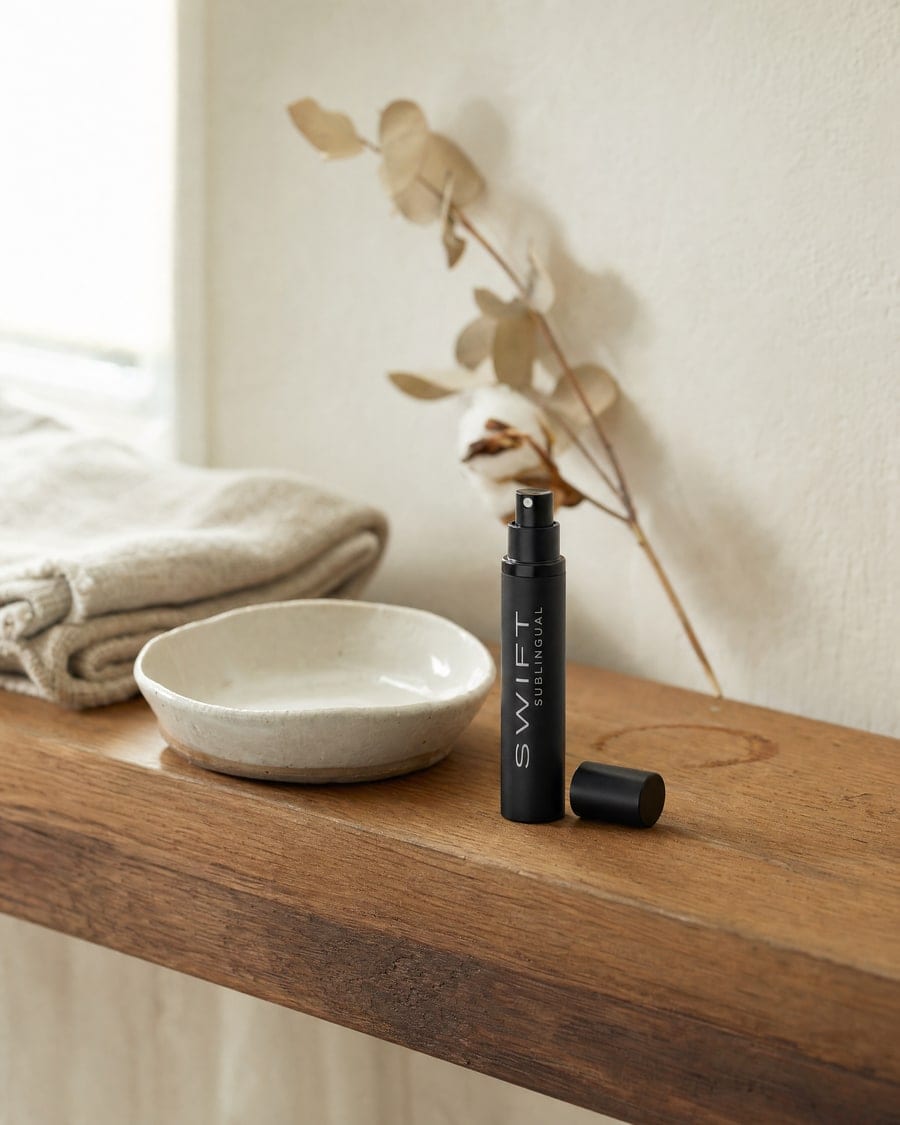
One spray under the tongue, held there a few seconds. It doesn't go through your stomach, so you feel it in minutes instead of waiting out an hour like you would with an edible. And because a spray is a small amount, it's easy to take a little, wait, and decide from there.
Swift comes two ways. One is mostly CBD, with only a trace of THC in it. The other is built around THC. Same bottle, same spray. Which one makes sense for you is a conversation to have with your practitioner.
We make it ourselves in Longview, from Washington cannabis, and every batch is tested before it leaves the building.
- How you take it
- Spray, under the tongue
- Comes two ways
- Mostly CBD, or THC
- Extra testing
- Metals, pesticides, mold
- Who can buy it
- Patients with a card
Swift isn't Drift. Drift is our recreational spray, on shelves at licensed stores around Washington for anyone 21 or over. Same idea, different rules.
Where to Find It
Because Swift is a medical product, it's sold at Washington stores that carry a medical endorsement, to patients who have a recognition card. We don't sell it to the public ourselves, and we can't ship it.
If you're a patient trying to track it down, or a store that wants to carry it, email us at hi@mirthprovisions.com and we'll point you to the nearest source.
If You Don't Have a Card Yet
It takes one appointment and one store visit.
- See a practitioner. A doctor, osteopathic physician, naturopath, physician assistant or nurse practitioner can authorize cannabis if you have a qualifying condition. What they give you is an authorization, not a prescription.
- Take it to a medically endorsed store. Bring the authorization and a photo ID. A certified consultant there adds you to the state's patient database and issues your card.
- Then you can use it. The card takes sales and excise tax off your medical purchases, lets you carry more, and is what a store checks before selling you something like Swift.
- Renew before it runs out. Same two steps again.
You need to be 18 or older. Younger patients take part through a parent or legal guardian acting as their designated provider. The Washington State Department of Health has the current forms and the full details.
What the Extra Testing Covers
Every cannabis product sold in Washington is tested before it reaches a store. Products made for patients are tested for more.
Swift is screened for heavy metals, including lead and mercury, for pesticides, and for the toxins mold leaves behind. Each one has a limit it has to come in under. It carries the Department of Health seal, which only a product that clears all of it is allowed to show, and the line the state puts on every product in this category: this product is not approved by the FDA to treat, cure, or prevent any disease.
What that gets you is simple. You know what is in the bottle, and someone outside our building checked.
Does the Federal Change Affect You?
Not really. In April 2026 the federal government moved medical marijuana from Schedule I to Schedule III. That mattered for research and for federal recognition that medical cannabis has medical use. It didn't change Washington's rules, and it didn't change what you need in order to buy a product like Swift.
For more: Washington Cannabis Law Guide